

The top news stories from Germany
Provided by AGP
Into the Void: Unlocking Space Science with Vacuum Technology
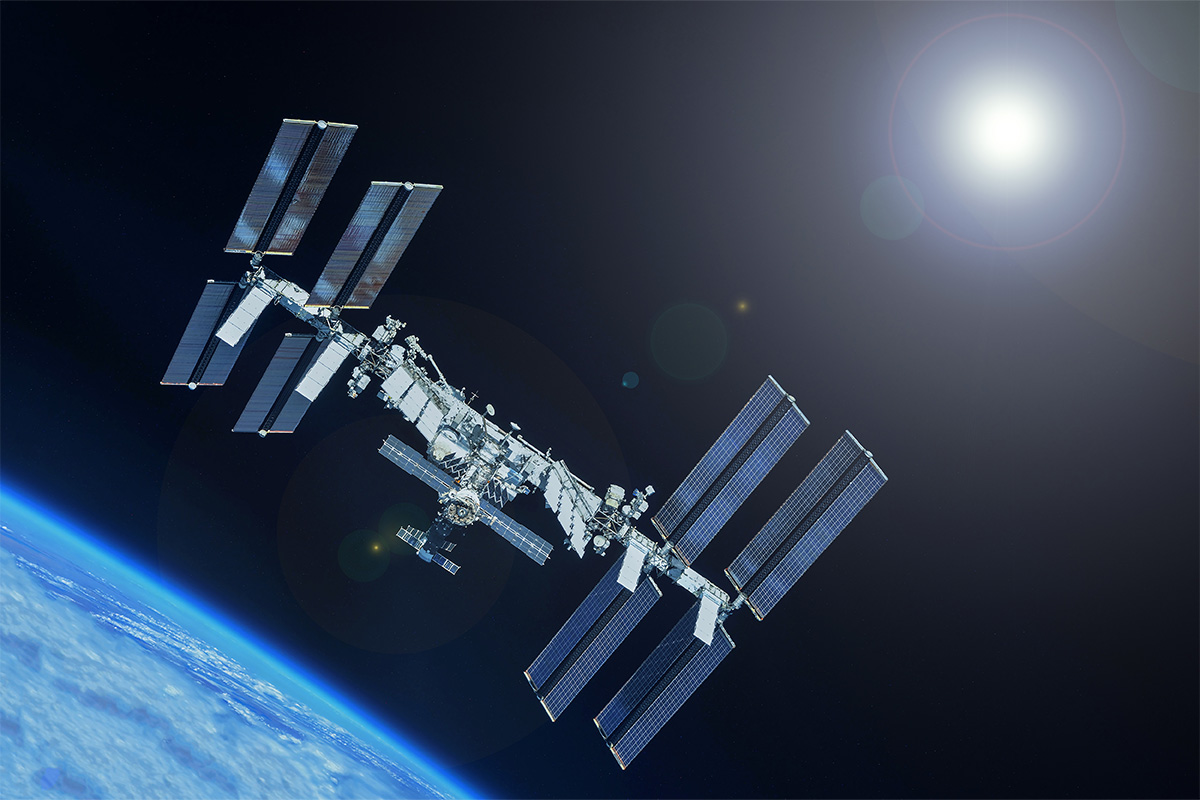
Space Research.
Before experiments reach orbit, vacuum technology recreates the silence of space on Earth — enabling breakthroughs that define the future of exploration.
ASSLAR, GERMANY, May 20, 2026 /EINPresswire.com/ -- Above the thin veil of the atmosphere, space presents a fascinating yet unforgiving environment: microgravity, extreme temperature shifts, and pressure levels reaching extreme high vacuum. For researchers, these conditions are not barriers but opportunities to uncover new principles of science and engineering. Long before experiments reach a rocket or the International Space Station (ISS), their success depends on laboratories where vacuum of space is simulated on Earth – allowing every variable to be tested and every process to be understood before emerging into space. At the heart of this recreation of space lies something invisible but essential: vacuum technology.
From Earth to orbit
Imagine a control room monitoring experiments aboard the International Space Station (ISS): Screens flicker with streams of data, displaying live tracking of samples like conductive metals as they are melted, cooled, and observed under microgravity in space to investigate their behavior.
On Earth, gravity would interfere with such experiments in multiple ways, introducing unwanted influences and masking the true behavior of the metal samples: convection currents stir up the molten material, heavy components sink, while lighter ones rise. Under microgravity in orbit, these effects are absent, and samples can be studied in their purest form. What emerges are precise insights into processes that are otherwise hidden: how substances transfer heat, how they flow, and how they solidify. These findings are far more than abstract numbers; they form the foundation for the development of advanced aerospace components, more efficient turbines, and additive manufacturing processes.
The journey begins in the lab
Before any experiment reaches space, its journey begins in laboratories on Earth. Here, researchers test their setups as though they were already in space – under ultra-high vacuum (UHV) conditions of 10⁻8 hPa (mbar) or even higher. To generate them, vacuum technology is crucial: fully integrated solutions for space research combine high-performance turbomolecular vacuum pumps, precise control, and custom-engineered vacuum chambers that replicate orbital conditions with high accuracy and long-term stability. To match the clean vacuum found in space and recreate experiment conditions accurately, it is essential to reduce gas leaks, keep the pressure even, control temperature changes, and maintain a stable environment for sensitive equipment..[FH1.1] This is why the vacuum equipment in use must be optimized for ultra-low background contamination and offer optional heating or cooling to reproduce the massive temperature shifts occurring in outer space. High-grade surface finishes with light-absorbing coatings simulate the darkness of the orbit on Earth. These vacuum setups allow researchers to test experiments with confidence before confronting the near-void in real outer space. Once such conditions are recreated using vacuum technology, metallic samples like those intended for the live experiment are placed inside the vacuum chamber under UHV to verify that the test setting allows the dedicated measurements.
Without vacuum, these tests on Earth would be meaningless: Air molecules would interfere with results and distort measurements. In vacuum, matter reveals its truest behavior.
A few minutes of silence
For some experiments, researchers do not need months aboard the ISS. They need only minutes – about 20, to be exact. That is how long a sounding rocket stays in microgravity before falling back to Earth. Sounding rockets are dedicated research rockets designed to carry scientific instruments on short suborbital flights. Unlike satellites or space capsules, they do not go into orbit around Earth – they travel up to space and then fall back down. This makes them ideal for experiments requiring only a short time in microgravity, such as testing instruments before sending them on more complex orbital or interplanetary missions. Inside compact experiment modules, tightly packed like a stack of drawers, materials are melted, solidified, or even 3D-printed. The rocket arcs high into the atmosphere, past 250 kilometers, where it remains in microgravity for a few minutes – like a scientific elevator to the edge of space. By the time the sounding rocket falls back down, researchers already have terabytes of data to sift through.
To make the best of this short session in space, all experiments are tested in vacuum laboratory setups on Earth.
Preparing for the future: manufacturing in space
Perhaps the most exciting vision lies in additive manufacturing beyond Earth. Imagine astronauts on a long-duration mission to Mars. Instead of waiting for spare parts from Earth, they produce them directly on board – layer by layer, from metal powders. No cargo limitations, no resupply missions, just self-sufficiency.
To get there, today’s scientists use vacuum chambers on Earth to test these processes. They simulate what may one day become routine: building complex, resource-efficient components directly in orbit. Every successful test brings them closer to a future where spacecraft repair themselves and habitats are built from extraterrestrial materials.
An invisible backbone
In the major achievements of space research, vacuum technology rarely gets the spotlight. It does not glow like a rocket launch or dazzle like astronaut spacewalks. Yet it underpins them all. From qualifying satellite systems before launch to enabling delicate experiments in orbit, vacuum is the silent partner of every discovery.
It has even made its way into space itself: Vacuum pumps and systems accompany experiments on the ISS, ensuring that the vacuum needed for precise science is always available. Without them, many of today’s breakthroughs would remain hidden.
In the end, the story of space research is not just about rockets, astronauts, or distant planets. It is also about the invisible stage we build here on Earth – where vacuum allows matter to reveal its secrets, and where the future of exploration quietly takes shape.
Dr Sandra Thirtle-Höck
Busch Group
+49 64 418021460
email us here
Visit us on social media:
LinkedIn
Facebook
Legal Disclaimer:
EIN Presswire provides this news content "as is" without warranty of any kind. We do not accept any responsibility or liability for the accuracy, content, images, videos, licenses, completeness, legality, or reliability of the information contained in this article. If you have any complaints or copyright issues related to this article, kindly contact the author above.
