

Germany Smart Locks Market Gains with Retrofit Demand; ASSA ABLOY, Allegion, Dormakaba Lead
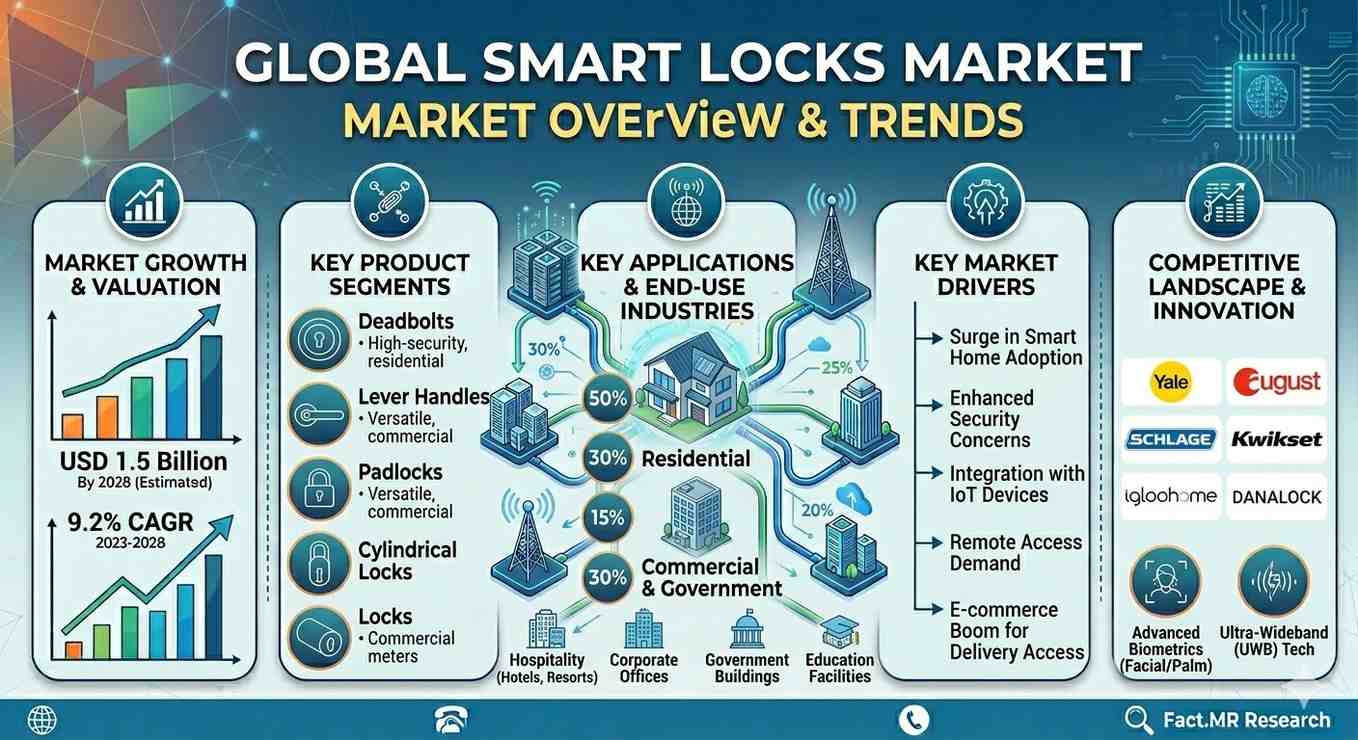
Smart Locks Market
Rising smart home adoption, certified access control standards, and IoT integration are accelerating Germany’s shift to keyless security infrastructure.
ROCKVILLE, MD, UNITED STATES, April 10, 2026 /EINPresswire.com/ -- According to Fact.MR’s latest analysis, the Germany smart locks market is expanding steadily as residential and commercial users shift toward connected access control solutions. Demand in Germany is projected to grow at 9.5% CAGR through 2036, driven by retrofit installations, smart home adoption, and increasing demand for certified digital security systems.The broader smart locks industry is experiencing strong momentum, supported by IoT integration and wireless authentication technologies. Growth is fueled by demand for secure, keyless entry, remote access management, and integration with building automation platforms.
Market transformation is driven by:
Rapid smart home adoption across Germany
Increasing demand for connected security systems
Growth in rental housing access control
Integration with building automation platforms
Get detailed market forecasts, competitive benchmarking, and pricing trends:
https://www.factmr.com/connectus/sample?flag=S&rep_id=14347
Quick Stats – Germany Smart Locks Market
Market Growth Rate (Germany): 9.5% CAGR (2026–2036)
Market Size (Current Year Benchmark): Smart locks market expanding with connected security demand
Market Size (Next Year Estimate): Continued strong adoption in residential retrofits
Forecast Outlook: High single-digit to double-digit growth through 2036
Incremental Opportunity: Expanding smart home installations and retrofit upgrades
Leading Segment: Bluetooth-enabled smart locks (52% share)
Leading Lock Type: Deadbolt smart locks (71% share)
Leading Country Focus: Germany
Key Players: ASSA ABLOY, Allegion, Dormakaba, Honeywell, Samsung Electronics
Executive Insight for Decision Makers
Germany’s smart locks market is transitioning from mechanical security to connected access ecosystems integrated with mobile apps and building automation systems.
Strategic shift
Move toward multi-factor authentication
Integration with IoT platforms
Retrofit-friendly smart lock solutions
What manufacturers must do
Focus on certified cybersecurity features
Offer modular retrofit-compatible locks
Integrate multi-protocol connectivity (Bluetooth, Wi-Fi, Zigbee)
Risks of not adapting
Losing market share to connected security providers
Reduced participation in smart home ecosystem partnerships
Margin pressure from commoditized mechanical locks
Market Dynamics
Key Growth Drivers
Increasing adoption of smart home devices
Rising demand for keyless entry in rental housing
Integration with building management systems
Growing consumer awareness of connected security
Key Restraints
Data privacy and cybersecurity concerns
Higher cost compared to traditional locks
Battery maintenance requirements
Emerging Trends
Biometric authentication integration
Mobile app-based access control
Multi-protocol connectivity support
Cloud-based access management
Segment Analysis
Leading Segment
Bluetooth-enabled smart locks account for 52% share, supported by low power consumption and easy installation.
Fastest Growing Segment
Wi-Fi and biometric-enabled smart locks are expanding rapidly in premium residential and commercial applications.
By Lock Type
Deadbolt smart locks – 71% share
Lever handle smart locks – growing adoption
Padlock smart locks – niche applications
Strategic Importance
Deadbolt smart locks dominate due to compatibility with existing doors and strong mechanical security combined with digital access.
Supply Chain Analysis
Raw Material Suppliers
Electronic component manufacturers
Semiconductor chip suppliers
Mechanical lock component producers
Manufacturers
Smart lock OEMs
Security hardware producers
IoT device manufacturers
Distributors
Smart home device retailers
Security equipment distributors
E-commerce platforms
End-Users
Residential homeowners
Property managers
Commercial building operators
Hospitality sector
Rental housing providers
Who Supplies Whom
Component suppliers provide chips and mechanical parts to smart lock manufacturers. OEMs integrate electronics and locking mechanisms, distributing finished products through security distributors and smart home retailers. End-users purchase through installers, property developers, or direct retail channels.
Pricing Trends
Smart lock pricing varies based on connectivity and authentication features.
Commodity vs Premium
Entry-level Bluetooth locks: mid-range pricing
Biometric and Wi-Fi locks: premium segment
Key Influencing Factors
Embedded electronics cost
Cybersecurity certification requirements
Connectivity protocols
Installation complexity
Margin Insights
Premium biometric locks offer higher margins
Subscription-based access services create recurring revenue
Enterprise deployments provide volume discounts
Regional Analysis
Germany is a key smart lock market in Europe.
Top Countries by CAGR
India – 13.1%
China – 12.8%
United States – 10.0%
Germany – 9.5%
Canada – 9.5%
Why Germany is Growing
Mature housing stock requiring retrofits
Strong data privacy compliance requirements
Growing rental housing access control needs
Increasing smart home adoption
Developed vs Emerging Markets
Germany growth driven by retrofit installations
Emerging markets driven by new housing construction
Germany emphasizes certified secure devices
Competitive Landscape
The Germany smart locks market is moderately fragmented with global leaders and regional players.
Key Players
ASSA ABLOY
Allegion
Dormakaba
Honeywell
Samsung Electronics
Salto Systems
MIWA Lock
UniKey Technologies
Dessmann
Nello
Competitive Strategies
Multi-protocol connectivity integration
Enhanced cybersecurity features
Biometric authentication innovation
Smart home ecosystem partnerships
Strategic Takeaways
For Manufacturers
Develop retrofit-friendly solutions
Focus on cybersecurity certification
Expand biometric authentication offerings
For Investors
Target smart home ecosystem companies
Invest in IoT security hardware providers
Monitor rental housing deployment demand
For Marketers / Distributors
Bundle smart locks with smart home kits
Offer installation services
Target property management companies
Future Outlook
Germany’s smart locks market will evolve toward:
Biometric access control systems
AI-driven security analytics
Cloud-based access management
Integration with smart building platforms
Growth will be supported by smart home adoption and connected security requirements.
Conclusion
Germany’s smart locks market is transitioning from traditional mechanical security to connected digital access systems. With increasing retrofit demand and IoT integration, opportunities are expanding for manufacturers offering secure, interoperable solutions tailored to Germany’s privacy-focused environment.
Why This Market Matters
Smart locks are becoming a critical component of Germany’s connected building ecosystem. As residential and commercial properties adopt digital access control, the market offers long-term growth opportunities driven by security, convenience, and smart home integration.
Full Report: Unlock 360° insights for strategic decision making and investment planning-
https://www.factmr.com/checkout/14347
To View Related Report:
Smart Education and Learning Market https://www.factmr.com/report/smart-education-and-learning-market
Smart Agriculture Solution Market https://www.factmr.com/report/smart-agriculture-solution-market
Smart Personal Safety and Security Device Market https://www.factmr.com/report/smart-personal-safety-and-security-device-market
Smart Camera Market https://www.factmr.com/report/smart-camera-market
S. N. Jha
Fact.MR
+1 628-251-1583
email us here
Legal Disclaimer:
EIN Presswire provides this news content "as is" without warranty of any kind. We do not accept any responsibility or liability for the accuracy, content, images, videos, licenses, completeness, legality, or reliability of the information contained in this article. If you have any complaints or copyright issues related to this article, kindly contact the author above.
